2025: A Year of Sharing Our Story Through Connection, Training, and Care
As the Community Health Representative (CHR) Program closed out 2025, we are reflecting on a year shaped by partnership with tribal communities. Together, we focused on:
- Continuing to build a well-trained, connected CHR workforce.
- Creating digital and media content.
- Updating CHR Program policy and guidance, Chapter 16.
- Improving dementia screening and follow-up support.
The following milestones are part of our ongoing efforts to help communities and health systems work better together.
CHR Training
CHR training remained a major focus in 2025. CHRs participated in expanded virtual and in-person sessions on many topics, including:
- Dementia awareness.
- Chronic disease management.
- CHR program development and outreach.
- Public health practice.
 This year, data reflected a total of 1,244 CHRs trained. This included 304 CHRs completing Basic, Advanced, or Specialty modules through the IHS CHR E-Learning platform. In addition, 940 CHRs were trained through the Northwest Portland Area Indian Health Board (NPAIHB) ECHO series program. Altogether, this represents a major investment in providing training and professional development opportunities for CHRs.
Outreach and Communication
Outreach and communication efforts helped increase awareness of CHR work through clear, culturally respectful materials. These included a four-part video series highlighting the strength and range of CHR services:
These videos are being used for training, orientation, and community education. They help others see the depth and heart of CHR work.
Indian Health Manual Chapter 16 Updates
This year, Chapter 16 of the Indian Health Manual was overhauled. This chapter establishes goals, objectives, responsibilities, and requirements for the IHS CHR Program with recommendations for tribal and urban Indian communities. IHS ensures that this Chapter 16 update applies to all CHR programs in all stages of planning, implementation, and assessment of CHR services.
Changes to this chapter reflect current public health priorities for IHS and support a stronger CHR workforce over time. The update process remains grounded in tribal sovereignty and reflects the cultural strengths of CHR programs nationwide.
Mini-Cog Pilot
In 2025, 20 CHR programs from tribal communities representing eight IHS areas participated in Cohort 2 of the CHR Mini-Cog Pilot. Through this program, CHRs help patients and families 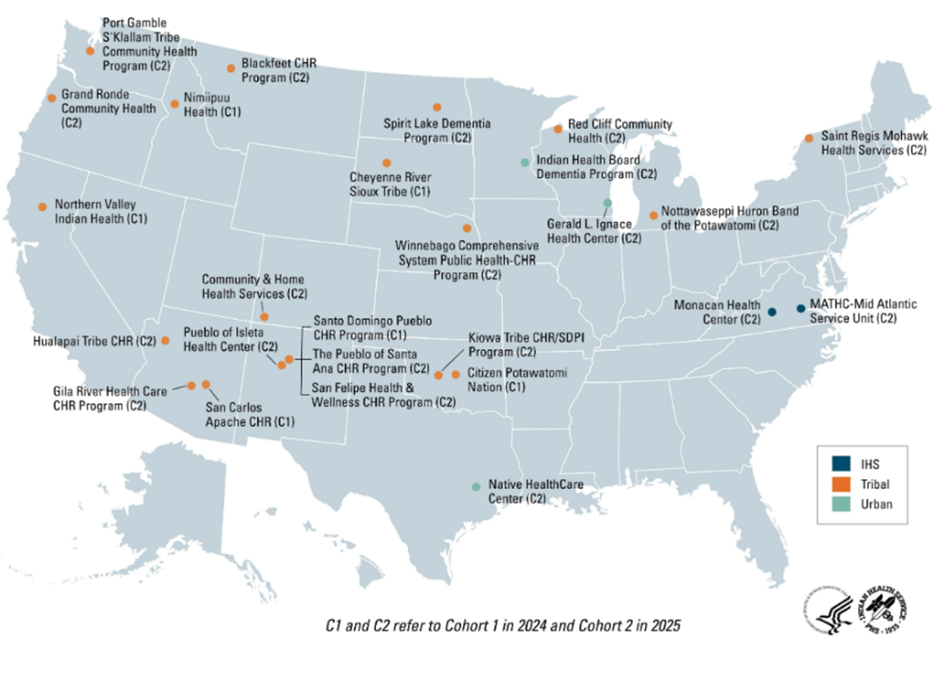 identify memory concerns and take early steps to better brain health. Data outcomes consisted of 957 screened community members by CHRs, increasing the prior year’s overall screening rates. In addition, referral networks have grown, and CHRs have successfully guided people to the next steps in dementia care.
Pilot participants' lessons learned highlighted the program's success, including hands-on training, teach-back practices, and monthly program sharing on facilitators, barriers, and challenges.
According to Michelle Archuleta, IHS CHR Program Consultant, “The CHR Mini-Cog Pilot is an exemplar partnership program between the Elder Health Team and the National CHR Program. In the CHR Program’s National Strategic Plan, we have ‘Partnerships’ as our second overall priority, with the goal of supporting the program and the CHR workforce to improve systems of care.”
Looking Ahead
The CHR Program’s story is one of cultural strength and community care. As we move into a new year, we carry forward the lessons and momentum of 2025.
Thank you to our CHR community, program partners, and allies for their contributions to this body of work. Together, we will keep building a strong, dynamic CHR workforce that continues to take care of our relatives, their families, and communities.


 The
The