IHS Releases New Video on Timely Dementia Detection
Helping to protect stories of loved ones
A new video from the Indian Health Service (IHS) Alzheimer’s Program highlights a critical message: early detection of dementia can change the course of care for patients and families.
The first in a three-part series, Every Moment Matters: Timely Dementia Detection Helps Protect Our Stories and Our Loved Ones, follows the Jackson family and their mother, Colleen. Their story shows how recognizing early signs—and talking with a health care provider—can lead to earlier diagnosis, treatment, and support.
IHS developed the video series to raise awareness among patients and health care professionals. It also offers practical guidance to support care for older adults.
Annual cognitive screenings, which can be part of an Annual Wellness Visit, help identify concerns before symptoms become noticeable. Patients should ask their providers for a cognitive screening if they have not received one. When dementia is detected early, people have more time to plan. They can explore care options, access services and support sooner, and remain independent longer.
 “We wanted to share personal stories and insights about how an earlier Alzheimer’s diagnosis can provide precious time and create opportunities for additional treatment and care,” said Dr. Jolie Crowder, national elder care consultant, Division of Clinical and Community Services at IHS.
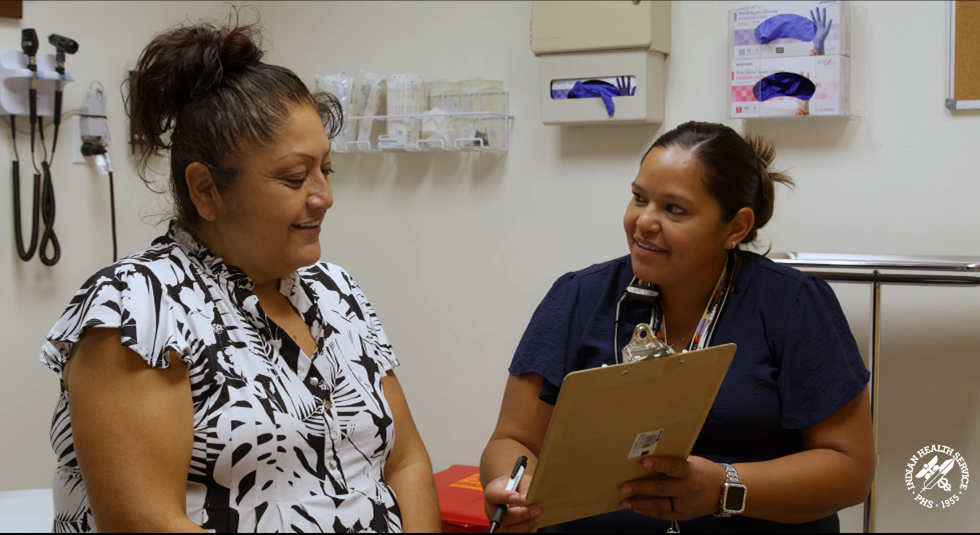
The video also features IHS Alzheimer’s Program grantee Nimiipuu Health. Team members Jessica Ford and Dr. Hailey Wilson share how early screening supports more coordinated, culturally grounded care. A longer documentary about Colleen’s experience, developed by the Nimiipuu Health team, served as inspiration.
“The goal of this video is to encourage and empower patients, family members, and health care staff to seek cognitive screening and timely detection,” Dr. Crowder said. “Early detection can help families prepare, access services sooner, and ensure care aligns with a person’s values, traditions, and wishes.”
The video is available to watch on the IHS Alzheimer’s website. Nimiipuu Health’s documentary, “Missing Pieces,” features the Jackson family in a moving story about memory and cultural strength. This film was created in partnership with the Nez Perce Tribe in Idaho.
Pictured: A clip from the recently released timely dementia detection video features Dr. Hailey Wilson with a patient at Nimiipuu Health in Lapwai, Idaho.
Geriatric Nurse Fellowship: Clinical Impact
A Focus on Polypharmacy, Risk Reduction, and Patient Outreach
 At White Cloud Health Center in Kansas, Licensed Practical Nurse Chelsea Coder and Nurse Practitioner April Wamsley are helping make care safer for patients taking multiple medications.
They led a Geriatric Nurse Fellowship (GNF) project focused on improving communication, strengthening the use of electronic health records (EHRs), and supporting patients affected by polypharmacy.
Polypharmacy—typically defined as taking five or more medications at the same time—is common among older adults and people with chronic conditions. It increases the risk of medication errors and can make care more complex.
To address this, the team developed a safer, more coordinated approach to care. The process also helps reduce errors.
Key findings from their project include:
- A team-based approach across roles makes care more effective.
- EHRs are valuable tools, but staff need training and support to use them well.
- Strong administrative backing helps systems run smoothly.
- Community health representatives can support patients during transport and answer questions about medications.
Overall, the White Cloud Health Center team’s approach reduced confusion, improved coordination, and increased confidence among patients and families.


 The report examines caregiving needs in American Indian and Alaska Native (AI/AN) communities. It draws on a literature review, key informant interviews, and input from a workgroup of experts, caregivers, and community representatives.