Indian Health Service - Alzheimer's Disease and Dementia Program

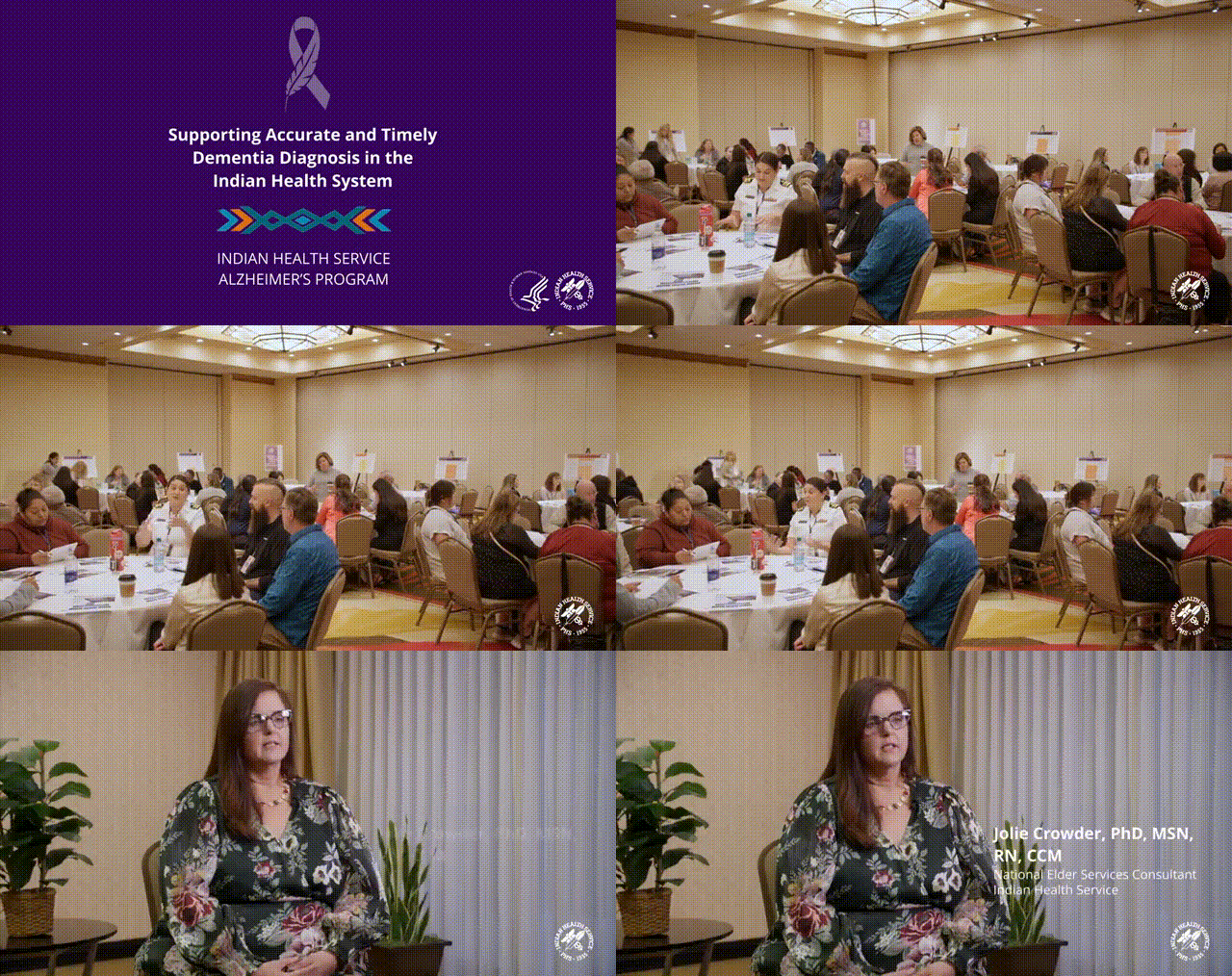
VIDEO: Supporting Accurate and Timely Dementia Diagnosis 

A new Indian Health Service (IHS) video featuring IHS staff discusses ways to improve dementia care in American Indian and Alaska Native communities. Supporting Accurate and Timely Dementia Diagnosis in the Indian Health System shows how IHS programs and pilot projects are helping care teams spot signs of dementia earlier. 

VIDEO: Supporting Accurate and Timely Dementia Diagnosis "We hope that programs serving American Indian and Alaska Native communities can get involved with our pilots and programs that support elders with accurate and timely dementia screening and diagnosis,” said Dr. Maria Bellantoni, chief clinical consultant for geriatrics and palliative care for IHS.    
 
Finding dementia early can help families understand what is happening, plan for the future, and find support sooner. The video highlights that health care staff don’t need major resources to make a difference. Even simple steps in screening, communication, and follow-up can improve patient care and reduce caregiver stress. It also shares ways clinics can support patients and families after a diagnosis. 
 
“The Indian Health Service has undertaken a multi-pronged approach in addressing early dementia detection and accurate and timely diagnosis. What we're seeing in our work is that every community is building and doing the work differently because they're based on the local community needs,” said Dr. Jolie Crowder, national elder services consultant for IHS.
 
This video is part of IHS’s growing library of Alzheimer’s disease and dementia resources. It is part of a series that offers clinics and care teams practical information and easy-to-use tools to support stronger, more culturally grounded care.
 
Videos in this series are available on the IHS Alzheimer’s Program website

​​​Newsletter Content Section Ribbon

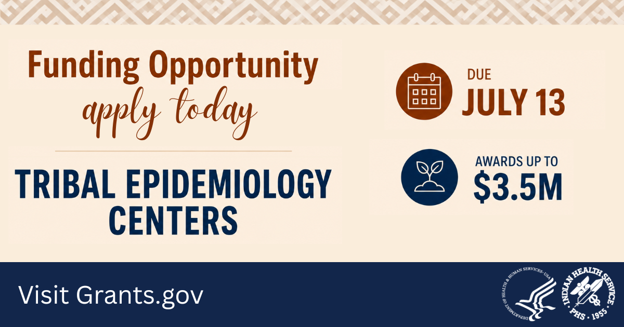
Tribal Epidemiology Centers NOFO: Take the Next Step and Apply Today   

The Indian Health Service is accepting applications for a new funding opportunity to strengthen public health services and support the Tribal Epidemiology Centers (TECs) and the communities they serve.   

This grant offers several awards to strengthen dementia care for American Indian and Alaska Native people and their caregivers, supporting key goals of the IHS Alzheimer’s Program

  • Three supplemental awards up to $150K will support activities that improve dementia awareness, early and accurate diagnosis, team‑based evaluations, care coordination, and caregiver support.
  • One supplemental award up to $200K will provide training and technical assistance to Alzheimer’s Program grantees to strengthen dementia care models.

This work will help tribes, tribal organizations, urban Indian organizations, and IHS facilities strengthen their dementia care models and meet program goals. You can find the full announcement on grants.gov.

The deadline for this opportunity is July 13th. If you need help accessing it, email the IHS Division of Grants Management at dgm@ihs.gov

Newsletter Content Section Ribbon

WEBINAR: Linking Health and Social Care for Dementia  

The National Alzheimer’s and Dementia Resource Center will host the webinar, Bridging Healthcare and Social Services for People Living with Dementia and their Caregivers, on June 24 from 1:00-2:00 p.m. ET. 

In this webinar, panelists will discuss how their organizations integrate healthcare and social services to better support people living with dementia and their caregivers. Important items to remember:

  • NADRC webinars are free and open to the public and recorded and available.
  • Pre-registration is required to attend the live webinars.
  • Closed captioning is available during the live event and is included in the recording for all NADRC webinars.

For questions, email NADRC-Webinars@rti.org.

Newsletter Content Section Ribbon

Unsubscribe

IHS Alzheimer’s Program ~ Alzheimer’s Event Calendar
IHS Elder Care Listserv

IHSElderHealth@ihs.gov

Follow the IHS on Facebook, LinkedIn, and X, formerly known as Twitter, to see more of what the IHS is doing in your community and around the country.