2026 IHS Video Series Strengthens Elder Health
The Indian Health Service (IHS) Alzheimer’s Program has released a new three-part video series. Each is designed to help clinics, care teams, community partners, and families in American Indian and Alaska Native communities. Focusing on dementia detection, diagnosis, and advance care planning, the videos feature providers, staff, and family members who share tools, real-world lessons, and community-driven approaches.
The series includes:
Dr. Jolie Crowder, national elder care consultant for the IHS Alzheimer’s Program, said the videos reflect “a growing commitment across tribal communities to make dementia screening and diagnosis more accessible, more culturally grounded, and more responsive to the needs of families.” She noted that timely detection and advance care planning can “support loved ones with dignity.”
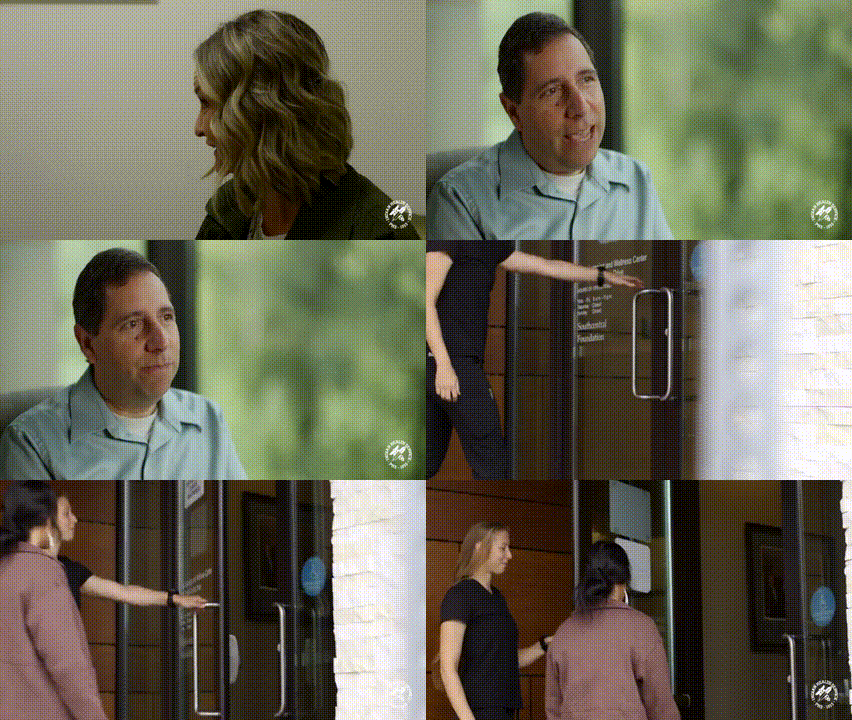 The first video shows how tribes and organizations can get involved with dementia programs. It features interviews with Dr. Crowder, Dr. Bruce Finke, Dr. Maria Bellantoni, Michelle Archuletta, and Rebecca Carillo. The second video explains how early detection helps protect family stories. In addition, it shares ways to strengthen relationships and support a caring community response. The third video focuses on advance care planning. It shows how cultural values, family traditions, and patient wishes can guide decisions about future care.
“This educational series gives care teams clear, practical steps they can use immediately,” said Dr. Maria Bellantoni, IHS chief clinical consultant for geriatrics & palliative care. “Early recognition and planning can make a huge difference for patients and caregivers.”
These resources are available on the IHS Alzheimer’s Program website. Each video is also accessible on YouTube for easy viewing and sharing. Using them during staff meetings, community presentations, caregiver education sessions, and on social media can help raise awareness of dementia care in your community.
Pictured: Dr. Christopher Piromalli and others are featured in Advance Care Plans: Honoring Wishes and Traditions.


 project focused on staff and how prepared they felt to identify cognitive impairment in elders and help them get follow-up care.
 Caregiver Coaches can help families: