Chickahominy Tribal Elders Help Shape Brain Health Conversations
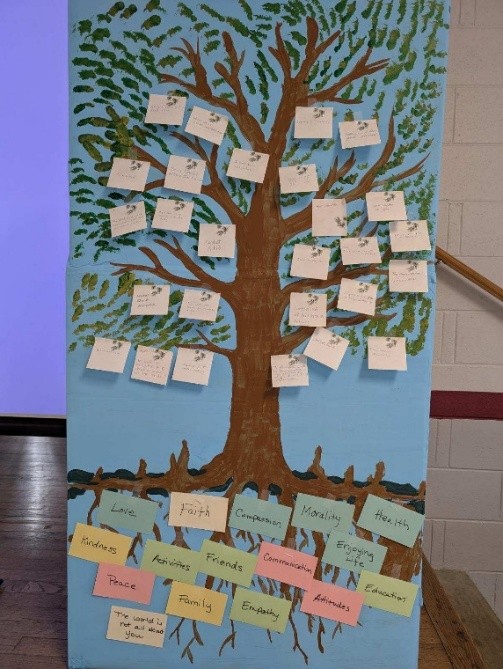
Chickahominy elders recently gathered to answer a simple but meaningful question, “What matters most to you?” They placed their words on an image of a bald cypress tree. Bald cypress trees line the banks of the Chickahominy River, where the Chickahominy Indian Tribe is located. The activity kicked off a new effort by the Tribe to promote healthy aging using the 4Ms of Age-Friendly Care.
As an Indian Health Service Alzheimer’s Program grantee, the Tribe is expanding dementia awareness, early recognition, and caregiver support. The 4Ms framework was designed to help health care organizations improve how care for older adults is delivered. The Tribe is adapting the framework to guide conversations with elders about their health and priorities in a clear, easy-to-understand way.
Stormie Miles, LPN, serves as the Tribe’s Brain Health Navigator. She leads outreach, education, and conversations that help elders focus on the four areas, or “4Ms,” that shape daily well-being:
- What Matters: What you value most in your life and health
- Medication: What you take and how it affects you
- Mind: Your mood, memory, and mental well-being
- Mobility: How you move, stay active, and get around safely
 The Virginia Geriatric Education Center at the Virginia Center on Aging delivered a three-part series on the 4Ms and invited elders to participate. The activity was eye-opening.
“After being approached about the series, elders expressed interest in learning more,” Miles shared. “They helped to shape the sessions and showed how the 4Ms can align with local priorities and cultural values.”
The messages on the cypress tree remind the Tribe where the work begins—with elders stating, in their own words, what matters most. Miles said the tree will have a permanent home at the Tribe’s office.
Pictured: Elders placed their messages on a bald cypress tree, an important symbol along the Chickahominy River.



 Indian health organizations. The webinar reflects clinical evidence updated in June 2025 and includes a panel discussion on ways to implement the pathway in primary care settings.